
Is It Dyslexia, or Is It the Language?
It's the question I'm asked more than any other by families at international schools. Your child is bright, curious and articulate – but reading and writing are a struggle. Is this dyslexia, or is it simply that they're learning in a language that isn't their first? The honest answer is that it can be genuinely hard to tell […]
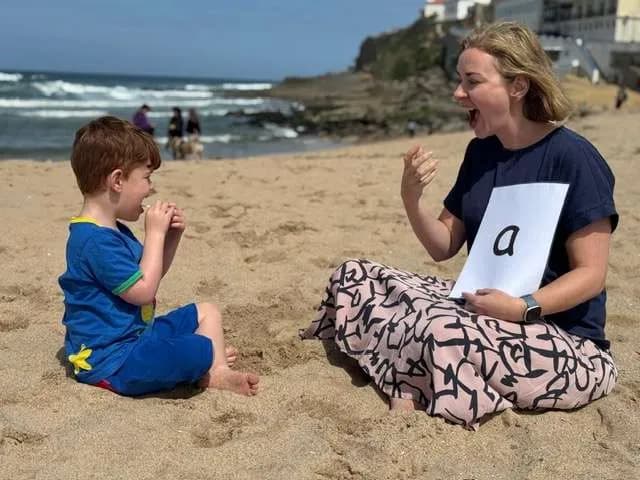
It's the question I'm asked more than any other by families at international schools. Your child is bright, curious and articulate. They tell wonderful stories. But reading and writing are a struggle, and school has started to use words like "behind."
So which is it? Is this dyslexia, or is it simply that they're learning in a language that isn't their first?
The honest answer is that it can be genuinely hard to tell – and that's exactly why so many multilingual children wait years for the right support.
Why the Two Look So Similar
A child who is still building English, and a child with dyslexia, can present in strikingly similar ways. Both might:
- Read slowly, or lose their place
- Spell inconsistently
- Struggle to get ideas down on paper despite talking fluently
- Avoid reading aloud
- Tire quickly during literacy work
Faced with that list, it's completely reasonable for a parent – or a teacher – to assume the language is the explanation. And often it is. Learning to read in an additional language genuinely takes longer, and that is not a problem to be fixed.
The difficulty is that "give it time" is also the advice most likely to delay help for a child who does have dyslexia.
What Usually Points Towards Language
Some patterns are more typical of a child who is still acquiring English:
- Progress is steady, just slower. The gap narrows over months and years rather than widening.
- Difficulties track vocabulary. They read familiar words well and stumble on unfamiliar ones.
- Comprehension improves markedly when you explain the words. The decoding was never the barrier.
- Their first language is developing typically, with age-appropriate reading and writing where they've been taught it.
What Is Worth a Closer Look
Other patterns deserve more attention, particularly when several appear together:
- A striking gap between how your child speaks and how they read or write. They can explain a complex idea aloud but cannot get a sentence onto the page.
- Difficulty with the sounds inside words – rhyming, clapping syllables, hearing that "cat" starts with c – in any language, not only English.
- The same word spelled three different ways on one page.
- Reading that stays effortful long after decoding "should" have become automatic.
- Difficulties in the home language too. This is the single most useful signal, and the one most often missed, because nobody thinks to check.
- A family history. Dyslexia frequently runs in families.
That last point about the home language matters enormously. If a child finds letter-sound work hard in Portuguese, Dutch or Mandarin as well as English, the language of instruction is unlikely to be the whole story.
They Can Also Both Be True
This is the part that gets lost. A child can be multilingual and dyslexic. Being an English learner offers no protection whatsoever – and it very often becomes the explanation that stops anyone looking further.
I have worked with a great many children whose difficulties were attributed to language for years, and whose families always suspected there was something more.
What to Do If You're Unsure
Watch across languages, not just English. Notice what happens in your home language. That comparison tells you more than anything happening in the classroom.
Keep a note of specifics. "Reads slowly" is hard to act on. "Read the same word three different ways in one paragraph" is genuinely useful.
Talk to school – and ask what they're comparing against. A helpful question is whether your child is being measured against monolingual peers or against other children with a similar language background.
Don't wait for certainty before asking for help. Good literacy support helps a child either way. Nothing is lost by starting.
The Reassuring Part
Whichever it turns out to be, the answer is not to work harder at the same thing. It is to find out precisely where the difficulty sits – which sounds, which patterns, which stage – and to teach from there, explicitly and in small steps.
That is what a literacy assessment is for. Not to attach a label, but to replace "something isn't working" with a clear picture of what your child can do, what they find hard, and exactly what to do next.
If you're asking yourself this question, you already know your child well enough to notice something. That instinct is usually worth following.